

1. Average Cost of a Solar Carport in 2025
1.1 Residential Solar Carport Pricing
In 2025, the average residential solar carport costs between $18,000 and $30,000 for a single-car setup. This typically includes a 5–7 kW solar array, aluminum or steel framing, inverter, wiring, and basic installation. Homeowners looking for a Custom Solar Aluminum Carport can expect prices to trend toward the higher end due to tailored designs, reinforced beams, and premium finishes. Location also plays a role; areas with higher labor rates or stricter permitting requirements may add $2,000–$5,000 to the total cost.
1.2 Commercial and Large-Scale Solar Carport Pricing
Commercial solar carports for businesses or parking lots often range from $35,000 to $80,000+ depending on the number of vehicle bays and total system capacity. Multi-car setups can reach 10–20 kW or more, which increases the number of panels, stronger supports, and sometimes additional electrical infrastructure. A Multi-car Solar Carport can save cost per watt due to economies of scale, but upfront investment is significantly higher. In commercial applications, careful design ensures panels receive maximum sunlight while accommodating vehicle clearance, which directly affects efficiency and ROI.
1.3 Price Trends Compared to 2024
Solar carport prices have slightly increased in 2025 compared to 2024, mainly due to higher raw material costs (aluminum, steel) and global supply chain fluctuations. On average, residential installations saw a 3–6% rise, while larger commercial projects increased around 5–8%. Despite higher costs, panel efficiency improvements and federal tax credits still make solar carports a smart investment. For example, a Modern Solar Carport delivering 6–7 kW may cost a bit more upfront but produces 10–15% higher annual energy output, shortening payback periods.
2. Key Factors That Affect Solar Carport Cost
2.1 Size and Power Capacity (kW Output)
The overall size and power capacity of a solar carport is the primary cost driver. A single-car heavy-duty solar carport delivering around 5–7 kW generally costs $18,000–$30,000, while a multi-car system can exceed $60,000 depending on bay count and roof area. For commercial lots, systems over 20 kW require reinforced structures and more advanced wiring, raising costs by 20–25%. Choosing the right capacity ensures efficiency without overspending on unneeded panels. A Heavy-Duty Carport offers robust support and long-term stability for high-output systems.
2.2 Material and Structural Design
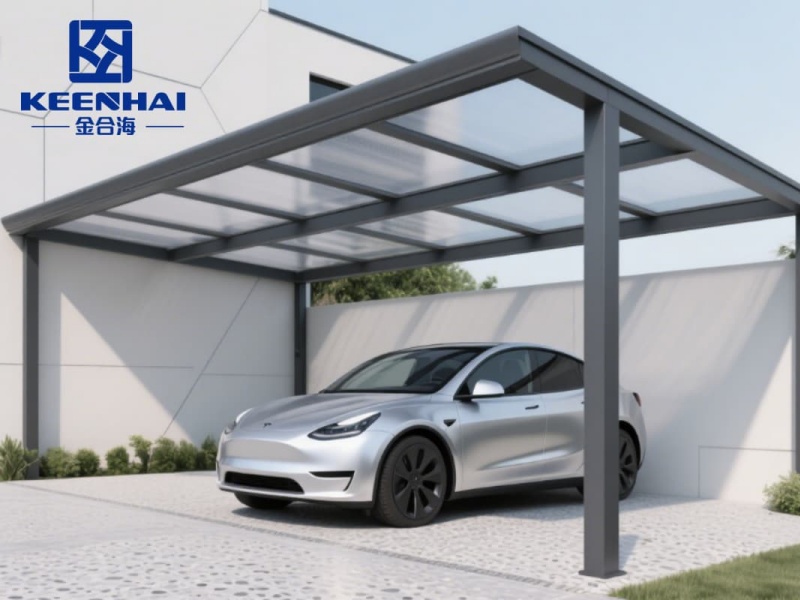
Material selection significantly impacts both durability and price. Aluminum is lightweight, corrosion-resistant, and requires less foundation work, whereas steel provides maximum load-bearing strength, ideal for snowy regions or larger spans. For example, an Aluminum Heavy Carport with thicker beams and reinforced joints costs about 10–15% more than standard steel versions. Custom designs, such as Custom Aluminum Carport, allow tailored clearance heights, roof angles, and panel placement, which can improve sun exposure and efficiency but also add to upfront cost. Proper structural engineering ensures the carport withstands wind, snow, and seismic stress over decades.
| Factor | Aluminum Heavy Carport | Steel/Modern Metal Carport | Notes |
|---|---|---|---|
| Weight | Lightweight | Heavier, stronger | Impacts foundation cost |
| Corrosion | High resistance | Requires coating | Maintenance differs |
| Price | +10–15% | Standard | Depends on design complexity |
| Lifespan | 25–30 years | 30+ years | Depends on weather conditions |
2.3 Solar Panel Type and Efficiency
Panel type and efficiency dictate both energy output and cost. Monocrystalline panels with 22–24% efficiency cost more but generate 10–15% more electricity annually than polycrystalline panels of the same size. Higher efficiency panels reduce the number of modules needed for a given kW output, saving space and potentially lowering structural costs. Modern Metal Carport designs often accommodate higher-efficiency panels with optimized tilt angles, boosting total annual energy production and shortening payback periods.
2.4 Labor, Installation Location, and Permitting Fees
Labor accounts for 15–25% of total costs, influenced by installation complexity, crew experience, and accessibility. Urban or high-wage regions may add $2,000–$5,000 to the project. Permitting and inspection fees vary between $500–$2,500, depending on local regulations. Site preparation, including leveling, foundation work, and wiring paths, can extend timelines. For large-scale setups, planning installation in stages can reduce downtime and labor overlap. A well-managed project ensures maximum efficiency and cost control without compromising safety or structural integrity.
3. Cost Breakdown by Carport Type
3.1 Single-Car vs Multi-Car Solar Carport
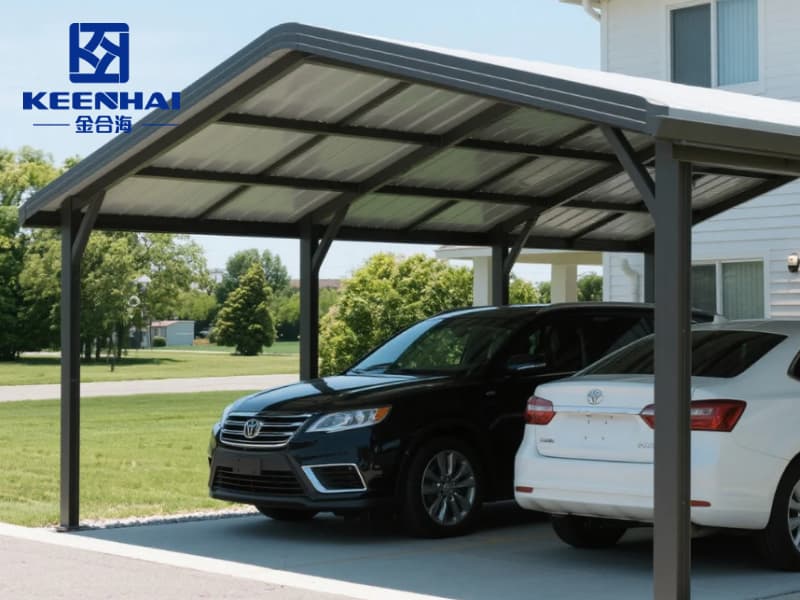
The cost difference between single-car and multi-car solar carports primarily comes from size and panel quantity. A single-car system typically covers 200–300 sq ft and delivers 5–7 kW, with an average price range of $18,000–$30,000. A two- to four-car system can span 400–900 sq ft, supporting 10–20 kW, which increases material, foundation, and labor costs to $35,000–$80,000+. Larger installations benefit from economies of scale: the per-watt cost drops from $3.00–$3.50/watt for single-car setups to $2.50–$3.00/watt for multi-car systems.
3.2 Aluminum vs Steel Solar Carport
Material choice directly affects both cost and durability. Aluminum carports are lightweight, corrosion-resistant, and easier to install on uneven terrain, but generally cost 10–15% more than steel equivalents. Steel carports, in contrast, offer higher load-bearing capacity for heavy snow or large multi-car arrays, which can be crucial in commercial applications. Below is a practical comparison for 2025 installations:
| Feature | Aluminum Carport | Steel Carport | Notes |
|---|---|---|---|
| Average Cost | $20,000–$32,000 | $18,000–$28,000 | Single-car setup |
| Weight | Lightweight | Heavy | Affects foundation requirements |
| Corrosion Resistance | High | Medium | Steel needs anti-rust treatment |
| Lifespan | 25–30 years | 30+ years | Maintenance impacts longevity |
3.3 Custom Solar Carport vs Prefabricated Models
Custom solar carports allow tailored dimensions, roof pitch, panel layout, and material selection. A Custom Solar Aluminum Carport can accommodate unique site conditions or aesthetic preferences but costs $5,000–$10,000 more than prefabricated models of similar capacity. Prefabricated kits are generally faster to install, with standardized components that reduce labor time, but may limit panel efficiency or aesthetic options. For residential users, prefabs often suffice, whereas commercial sites or unusual lot layouts benefit from the flexibility of custom designs.
4. Installation and Maintenance Expenses
4.1 Typical Installation Process and Timeline
Installing a solar carport typically involves 4–6 steps and takes 2–4 weeks depending on size and complexity:
-
Site Preparation: Clear the lot, level ground, and pour foundation pads or footings. For multi-car systems, foundation work can take 3–5 days.
-
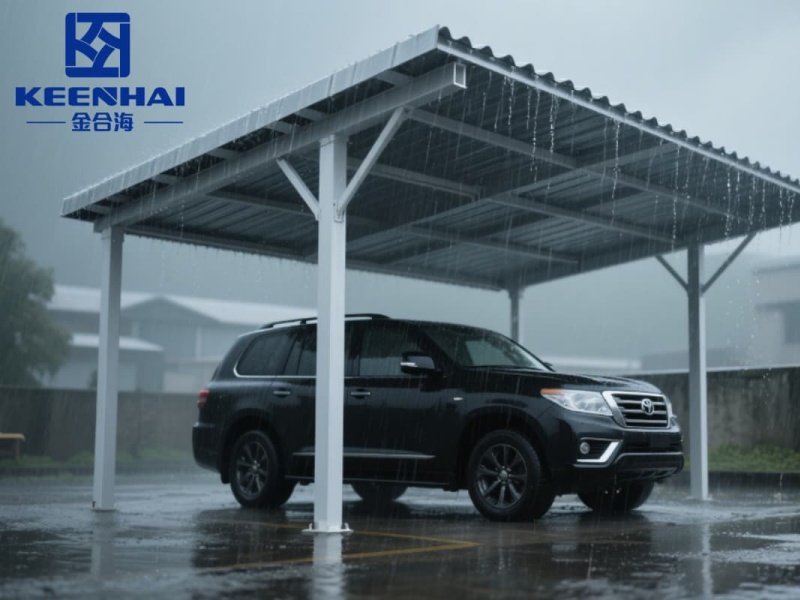
Structural Assembly: Erect aluminum or steel framing, ensuring precise alignment for panel installation. A Heavy-Duty Carport can support higher loads with minimal flex, making this step critical.
-
Electrical Wiring: Connect panels to inverters and integrate with the main power system. Commercial setups with multiple inverters may require 1–2 additional days.
-
Panel Mounting: Secure panels to the roof structure, optimizing tilt and orientation for maximum energy output.
-
Inspection & Testing: Confirm system functionality, check for loose connections, and ensure compliance with local codes.
-
Final Commissioning: Activate the system, track performance data, and hand over operation manuals.
Proper sequencing and experienced crews reduce installation errors and ensure long-term durability.
4.2 Annual Cleaning, Inspection, and Repair Costs
Maintenance keeps energy output high and extends lifespan. Typical annual costs:
-
Cleaning: $150–$300 per single-car system; $500–$1,000 for multi-car setups. Panels lose 5–10% efficiency if debris or dust accumulates.
-
Inspection: $100–$200 annually to check mounts, wiring, and inverters.
-
Repairs: Minor fixes like replacing broken panels or inverter components average $300–$1,500, depending on system size.
Regular maintenance prevents larger, costly issues and keeps the system running at 95–98% of peak capacity over 20–25 years.
4.3 Warranty and Long-Term ROI Considerations
Most solar carports come with 10–25 year warranties on panels and 5–10 years on structural components. A well-designed system can recoup its cost in 6–9 years, depending on energy production, electricity rates, and available incentives. For example:
| Carport Type | Installation Cost | Annual Savings | Payback Period | Notes |
|---|---|---|---|---|
| Single-Car Residential | $20,000 | $2,500–$3,000 | 7–8 years | 5–7 kW system |
| Multi-Car Commercial | $60,000 | $8,000–$10,000 | 6–7 years | 15–20 kW system, higher output |
Choosing higher-efficiency panels or a slightly larger structure increases upfront costs but shortens the payback period. Efficient installation, minimal downtime, and regular maintenance maximize ROI over the 25–30 year lifespan of the carport.